



Search engines are now more than just links and blue headlines. Users are now receiving conversational, condensed responses thanks to the emergence of AI-powered search engines like Google’s Search Generative Experience (SGE), ChatGPT, Perplexity, Gemini, and Copilot.
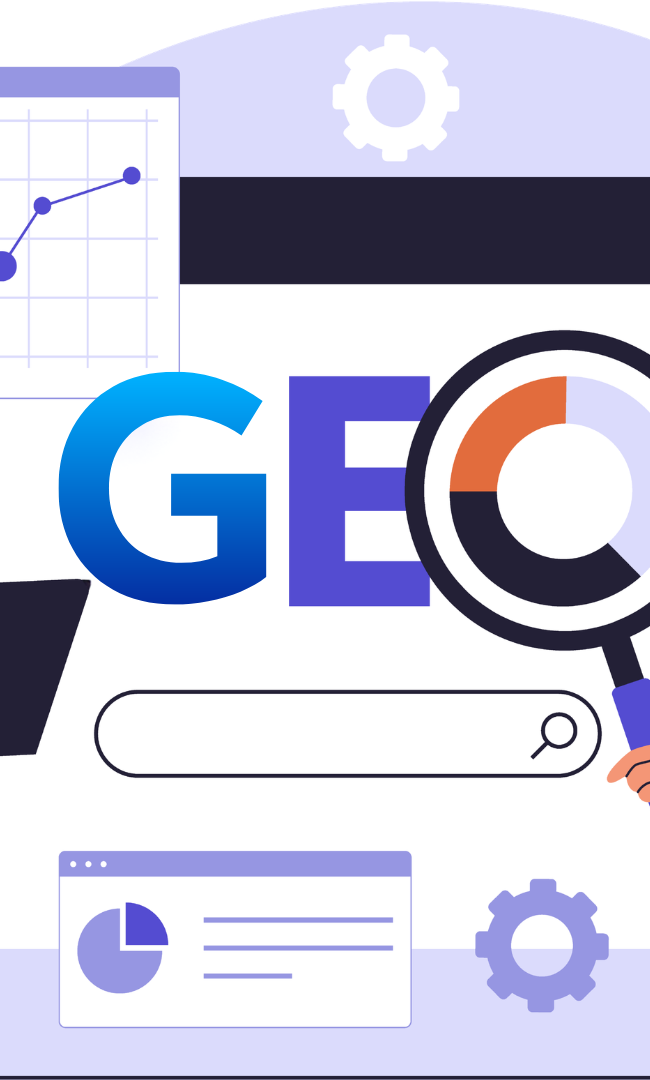
They are shown a single, reliable explanation rather than having to scroll through ten results. This shift is rewriting the rules of visibility. As businesses realize that traditional SEO alone is no longer enough, a new focus is emerging: Generative Engine Optimisation (GEO). GEO is the art of ensuring your brand appears inside AI-generated responses, and it is fast becoming a game-changer. When your content is GEO-optimized, AI is more likely to subtly position your brand as the most reliable, relevant, and genuine source.
SEO to GEO: The Strategic Shift
Here’s how the approach diverges. Traditional SEO raises your webpage visibility in results, while GEO focuses on making AI engines select your content as a preferred source. For example, an AI might answer ‘What are the healthiest breakfast cereals?’ with just a couple of highlighted brands, not a full list. The real question becomes: how can you ensure your brand is mentioned in those concise responses?
How do generative AI engines work?
Engines powered by AI are trained on enormous datasets and learn from a variety of sources, such as websites, knowledge graphs, user reviews, and even social signals. They assess more than just keywords.
Relevance: Does the information directly address the user’s question?
Authority: Does the company have a solid reputation in its field?
Authenticity: Does the information show genuine knowledge and openness?
Consistency: Is there consistency in the data across all digital touchpoints?
Google’s E-E-A-T framework, which stands for Experience, Expertise, Authoritativeness, and Trustworthiness, is closely related to this. AI engines are more likely to mention you in their generated responses if your brand exhibits E-E-A-T.
Top 5 Generative Engine Optimization (GEO) Strategies For Boosting AI Visibility
1. Prioritize Conversational Questions:
The lifeblood of generative engines is natural language. Instead of stuffing them with keywords, focus on long, conversational phrases that resemble actual user questions. For instance, “What are some effective ways for small businesses in India to use social media marketing?”
2. Use E-E-A-T to Establish Topical Authority
Display your authority, knowledge, experience, and dependability. Blogs, in-depth case studies, and industry analysis should be posted. Include author biographies, reference reliable sources, and emphasise endorsements or credentials.
3. Make Content Stronger on Several Platforms
AI learns from the digital footprint of your brand, not just from your website. Post consistent, optimized content on various sites like YouTube, LinkedIn, and Google Business Profile.
4. Create Updated, Organized, and Clear Content
AI favours content that is current and simple to parse. Use H2/H3 headers, FAQs, bullet points, and schema markup to identify your content as high-quality reference material for search engines.
5. Pay Attention to Citations and Brand Mentions
Backlinks are not the only thing that generative engines use. Additionally, they take into account brand mentions from reliable sources. Your GEO is strengthened when you are quoted in press releases, industry publications, and local business directories.
Differences between GEO & SEO:
SEO → Competes for page rankings.
GEO tries to be included in responses generated by AI.
SEO → Centred on ranking signals, backlinks, and keywords. The E-E-A-T-fueled signals of authenticity, authority, and trust were emphasized by GEO.
The two are complementary. Businesses require both, but as the use of AI-powered search increases, GEO is quickly taking precedence.
Generative Engine Optimization (GEO) is the future of SEO
Predictive SEO, where AI makes recommendations before users even ask, is the direction that generative search is taking. Imagine that when a user types in, “What’s the best skincare routine for oily skin?” your product will be suggested automatically. That is the power of GEO.
AI-generated responses will be dominated by brands that adjust early, while those that don’t run the risk of becoming invisible, even if they were once Google’s top-ranked brand. Generative Engine Optimisation (GEO) is the next big thing in search, not just a trendy term. Businesses in India that use GEO strategies, conversational content, E-E-A-T-driven authority, structured optimization, and multi-platform consistency will have their ads promoted by AI engines automatically.
As one of Mumbai’s top digital marketing agencies, Senate Marketing specialises in assisting brands in adjusting to this change. Through the development of E-E-A-T-driven authority and content optimisation for AI-powered engines, we make sure your brand is recommended rather than just appearing in searches. Our Generative Engine Optimisation services help businesses become a trusted source within AI-generated responses, boosting the visibility of their brand on AI search engines.
- How can businesses improve visibility in AI-generated search results?
Businesses can improve visibility by creating conversational, well-structured content that directly answers user questions. Building authority, trust, and consistency across digital platforms also helps AI engines recognise reliable sources.
- How is Generative Engine Optimization (GEO) different from traditional SEO?
Traditional SEO focuses on improving website rankings in search results. GEO focuses on helping AI engines select and mention trusted brands directly within generated responses.
- How do AI-powered search engines decide which content to recommend?
AI engines evaluate relevance, expertise, authority, and trustworthiness of content. They also consider consistency of information across websites, platforms, and brand mentions.
- How can businesses prepare for the future of AI-powered search?
Businesses should focus on building strong topical authority and publishing clear, up-to-date content. Maintaining consistent brand signals across multiple platforms helps improve long-term AI visibility.